
Thinking about setting up a sauna in your garage but not sure what it’ll do to your electric bill? You’re in the right place. Let’s walk through how much electricity a sauna uses and what that really means for your monthly costs.

As an energy-conscious homeowner, it helps to run the numbers before you plug in. Below, you’ll see how to estimate your sauna’s electricity usage step-by-step. We’ll also compare dry and infrared saunas so you can choose the option that’s easier on your wallet.
Calculating Your Home Sauna’s Electricity Usage
Most personal home saunas draw somewhere between 1.5 and 6 kilowatts (kW) of power. The exact number depends on the size of the unit, how often you use it, and whether you’re running a traditional dry sauna or an infrared model. The good news is that figuring out your true operating cost is very straightforward.
Start by checking your utility bill to find your electricity rate (listed in cents per kilowatt-hour, or kWh). Next, estimate how many hours per month you’ll actually use the sauna. From there, you can plug those numbers into this simple energy-use formula to get your monthly cost.
Electricity usage (kWh) = Power (kW) × Time (hours)
Electricity cost = Electricity usage (kWh) × Electricity rate (cents/kWh)
As of 2024, the average residential electricity price in the U.S. is about 16.21 cents per kWh. Your actual rate may be lower or higher depending on your state and provider. You can look up local prices for free at the EnergyBot website, then estimate your sauna’s energy consumption before you ever buy one.
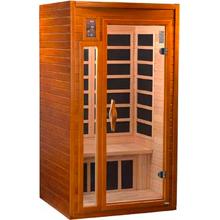
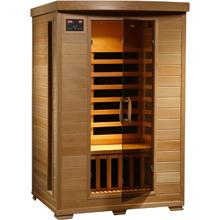
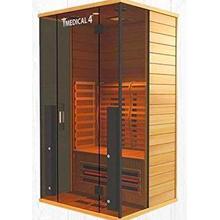
So, How Much Electricity Does a Sauna Consume?
Here’s a quick example. Suppose your electricity rate is 12 cents per kWh, your home sauna draws 3 kW of power, and you use it for 20 hours each month. Your calculation would look like this:
Electricity usage = 3 kW × 20 hours = 60 kWh
Electricity cost = 60 kWh × 12 cents/kWh = $7.20
In this scenario, you’d spend about $7.20 per month to run your sauna for 20 hours. If you double your time in the sauna to 40 hours, you’d simply double the cost. Likewise, if your power rate is 24 cents/kWh instead of 12 cents, your cost would also double.
In the big picture, a sauna’s electricity consumption is comparable to a few other common household appliances. Just remember that every region has different rates, so use your own bill as the final guide.
Calculation Tip: A typical 2-person home sauna usually falls in the 1,500–3,000 watt range. For comparison, many standard space heaters and electric fireplaces draw between 750 and 1,500 watts.
Dry Sauna vs. Infrared Sauna Comparison
Once you know how to estimate energy usage, the next step is choosing the type of sauna that best fits your budget and garage space.

Dry (traditional) saunas heat the air inside the room using a stove or electric heater and hot rocks. That hot air, in turn, warms your body. To feel the classic “Finnish sauna” intensity, they typically run hotter, in the 160–200°F range.
Infrared saunas work differently. They warm your body directly with infrared emitters. The radiation (you can choose low-EMF options) penetrates into your skin and tissues to trigger sweating at lower air temperatures, usually about 120–140°F.
So which style is more energy efficient in a garage setup? In general, infrared saunas use less power to achieve a similar effect for several reasons.
6 Ways Infrared Saunas Are More Energy Efficient
- Direct Heating: Infrared heaters warm your body directly instead of heating a big volume of air first. That targeted heat transfer is more efficient and typically requires less total power.
- Lower Operating Temperatures: Infrared units run comfortably in the 120–140°F range, while many Finnish-style dry saunas operate between 160–200°F. Less temperature difference means less energy needed to reach and maintain your set point.
- Faster Warm-Up: Because infrared heaters act directly on your body, there’s less “warm-up lag.” You spend less time preheating an empty room, which trims energy use before you even sit down.
- Efficient Heat Absorption: Infrared radiation penetrates into the skin and encourages sweating without needing to superheat the air. Traditional saunas must raise the air temperature much higher to trigger similar effects, which uses more power.
- Zonal Heating: Infrared energy can be focused on seating areas and the body instead of heating every cubic inch of the room evenly. That “zonal” effect is another reason they’re more efficient overall.
- Minimal Preheating: Many infrared units require little or no long preheat time. You can step in soon after turning them on, cutting down on wasted energy while the sauna sits empty.
How to Save Money on Your Sauna’s Energy Consumption
Here are five practical ways to keep your power costs low while still enjoying all the health and relaxation benefits of your “mini sweat lodge.”
1. Choose an Energy-Efficient Sauna
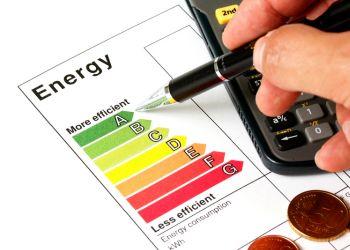
Focus on models that are designed to make the most of every watt. While you won’t see Energy Star labels on saunas, you can still compare wattage and interior cubic footage between models. Infrared units typically cost less to run than dry saunas, and some infrared designs are more efficient than others—especially those that pair good insulation with high-quality heaters.
2. Set a Timer to Prevent Wasted Power
Use a built-in or external timer so your sauna runs only as long as you need it—say, 15–20 minutes per session—then shuts off automatically.
Here’s how a timer helps:
- Efficient Energy Use: You can schedule preheat and shut-off times so the sauna isn’t left on accidentally after you’re done, reducing unnecessary runtime and power draw.
- Prevents Overheating: Limiting session length avoids excessive temperatures and cuts down on extra wear and tear, which also indirectly saves energy and maintenance costs.
- Convenience & Peace of Mind: Set it and forget it—no worrying about whether you turned the heater off as you head back inside the house.
- Longer Equipment Life: Avoiding marathon run times reduces stress on the heating elements and electronics, helping your sauna last longer and delaying expensive repairs or replacements.
3. Insulate Your Sauna to Reduce Energy Consumption
Good insulation is one of the biggest levers you have for lowering operating costs. Choose high-temperature-friendly materials like fiberglass, mineral wool, or rigid foam boards in the walls and ceiling to keep the heat where you want it—inside the cabin.
Install the insulation snugly between studs, then add a vapor barrier to keep moisture out of the wall cavity. Don’t forget the ceiling and, if possible, the floor. Finally, make sure the door seals tightly with heat-resistant weatherstripping so your sauna isn’t constantly “leaking” warm air into the garage.
4. Lower the Heater Temperature to Use Less Electricity
Dialing the temperature down just a bit can make a noticeable difference in power use. Most units are capable of running at very high temps, but many people find they’re perfectly comfortable—and still get all the benefits—at slightly lower settings.
Because the heater doesn’t have to work as hard to maintain a lower set point, it pulls less energy over the course of each session. Over weeks and months, that adds up to real savings without sacrificing the relaxing, therapeutic feel you’re after.
In other words, you can often trade just a few degrees of peak temperature for a surprisingly large reduction in energy usage.
Note: Check whether your utility company offers off-peak or time-of-use discounts. Shifting your sauna sessions into cheaper rate windows can cut energy costs by 20–30% or more without changing anything else.
5. Choose a Smaller Sauna to Lower Your Electric Bill

Downsizing can be one of the easiest ways to save. A compact 2-person unit uses less electricity than a larger 4- or 6-person model simply because there’s less volume to heat.
You save twice: first on the initial purchase price, and then every month as you spend less to warm a smaller interior space while still enjoying full, relaxing sessions.
Summary
Managing your sauna’s electricity use comes down to a few smart choices. Start by estimating your monthly cost using your utility rate, heater wattage, and planned usage hours. Then choose an efficient model, rely on timers, insulate well, lower the temperature slightly, and consider a smaller size to keep expenses in check.
With those strategies in place, you can enjoy all the wellness and relaxation benefits of sauna therapy in your garage—without being surprised by your electric bill.


