
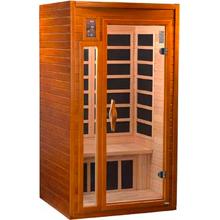
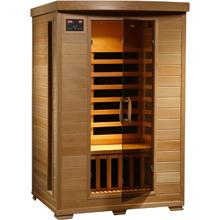
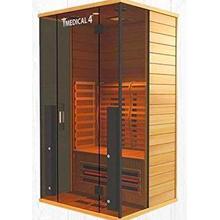
When you start comparing the best infrared saunas for home use, a few models really stand out. My two favorites are the budget-conscious Heatwave Radiant 2-Person Infrared Sauna and the feature-rich Full Spectrum Medical Sauna, which offers a broader range of therapeutic options. Both give you strong value for the price, with DIY-friendly assembly, efficient operation, and thoughtful add-ons that make daily use more enjoyable.

Top Sauna Picks for Value, Safety & Easy Set Up:
6 Things to Look at When Choosing an Infrared Sauna
To keep your “sauna shopping” simple, start with the fundamentals. Before you fall in love with a pretty photo, you’ll want to weigh these core factors. Here’s a quick checklist of the most important features to evaluate:
- Sauna Size & Capacity (Is Bigger Better?)
- Infrared Technology (Differences Between Near, Mid & Far Infrared)
- Sauna Quality, Warranty & Lifespan (What to Look for)
- Infrared Sauna Safety & EMFs
- Cost-Saving & Energy Efficient Saunas – Factors that Save You Money
- Are Extra Therapeutic Features Worth the Money?
1. Sauna Size & Capacity:
Start with the practical question: who will actually be using the sauna and where will it live? Decide how many people you want to sit comfortably at one time and measure the corner, wall, or garage bay where you plan to place it. That way you can choose a model that fits your lifestyle and your square footage instead of trying to force a too-large unit into a tight space.

Note: A typical 1-person infrared sauna is around 36″ x 36″ x 75″. A common 2-person footprint is roughly 48″ x 48″ x 75″. Most single-car garages can easily accommodate a 1-person unit, and many will comfortably fit a compact 2-person sauna as well.
Pros & Cons of Buying a 1-Person VS a 2-Person Sauna:
| 1-Person Infrared Sauna | Pros | Cons |
|---|---|---|
| Space-Efficient | – Great for compact garages or multipurpose spaces, leaving room for storage, gym gear, or a workbench. | – Limited Capacity: Only fits one person, so you can’t share sessions with a partner or friend. |
| Energy Efficiency | – Smaller cabin means lower wattage heaters and reduced operating costs over time. | – Solo Use Only: Not ideal if you prefer to socialize or want the option of dual use. |
| – Tighter Interior: Less space to stretch out or do light movements during a “sauna workout.” |
| 2-Person Infrared Sauna | Pros | Cons |
|---|---|---|
| Shared Experience | – Perfect for couples, family members, or friends who want to enjoy the sauna together. | – Larger Footprint: Takes up more garage real estate and may compete with storage or parking space. |
| More Room to Move | – Extra elbow room for stretching, gentle yoga, or simply changing positions comfortably. | – Higher Energy Use: Bigger interior typically requires more power, which can increase monthly costs. |
| Versatile | – Works well for both solo sessions and two-person use, giving you more flexibility day-to-day. |
2. Infrared Technology:
Infrared saunas use three main wavelength ranges—near, mid, and far infrared. Each penetrates the body to a different depth and is associated with slightly different wellness benefits.
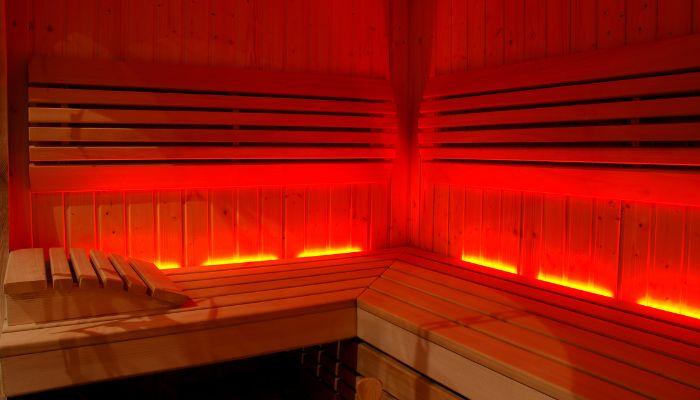
- Near-Infrared: Primarily affects the surface layers of the skin. It’s often associated with skin renewal, collagen support, and faster healing of minor skin issues—almost like bringing a mini facial studio into your sauna.
- Mid-Infrared: Reaches more deeply into soft tissues. This range is commonly linked to easing muscle and joint discomfort, making it a good match for recovery after workouts or for general stiffness.
- Far-Infrared: Penetrates the deepest, gently warming the body from the inside out. It’s frequently credited with supporting detoxification, boosting circulation, and helping increase metabolic activity.
Knowing which wavelengths you care about most helps you match the sauna to your goals—whether that’s glowing skin, less soreness, overall wellness, or all of the above.
Note: The Full Spectrum Medical Sauna delivers all three—near, mid, and far infrared—so you don’t have to choose. You get a full “stack” of benefits in one unit.
3. Sauna Quality, Warranties & Lifespan:
How long your infrared sauna lasts comes down to the materials, build quality, and the brand behind it. Look for cabins made from higher-grade woods such as cedar or hemlock. These woods insulate well, handle heat and moisture gracefully, and are less likely to warp or crack with time.

Cedar gives off a naturally pleasant aroma and stands up well to humidity, while hemlock offers a smooth, clean look with minimal knots—great if you prefer a more modern style.
Both the Heatwave Radiant and the Full Spectrum Medical Sauna use hemlock panels. Brands like JNH Lifestyles and Radiant Saunas are often noted for offering solid construction and strong feature sets at reasonable price points.
Most infrared heaters are designed to operate for 5–15 years or more. With good care, many last even longer. If you ever need to replace a heater in a 2-person unit, expect a typical range of $200–$600+ depending on brand and configuration.
Also pay close attention to warranty coverage. For example, Radiant offers a 7-year warranty on many models. Other reputable names, such as Sunlighten (up to 5 years) and Health Mate (5 years), provide longer-term protection as well. With quality materials and routine maintenance, it’s realistic for a home infrared sauna to last 15–20+ years.
4. Sauna Safety:
Safety should be at the top of your list. Make sure any sauna you’re considering has recognized safety certifications—such as UL or ETL—for its electrical systems and components. These labels signal that the unit has been independently tested to meet accepted standards.
What about EMFs? All infrared saunas emit some electromagnetic fields, generally in the range of about 0.6 to 5 mG. This is considered low-frequency, “non-ionizing” radiation, which is widely viewed as non-harmful at typical exposure levels. The higher-energy, “ionizing” type is the one associated with potential cellular and DNA damage.
Even so, some people prefer to minimize EMF exposure. If that’s you, look for low-EMF sauna designs. Brands like Sunlighten and Clearlight are known for keeping EMF levels in the lower range (around 0.5–1 mG in many cases).
5. Cost-Saving, Energy Efficient Saunas:
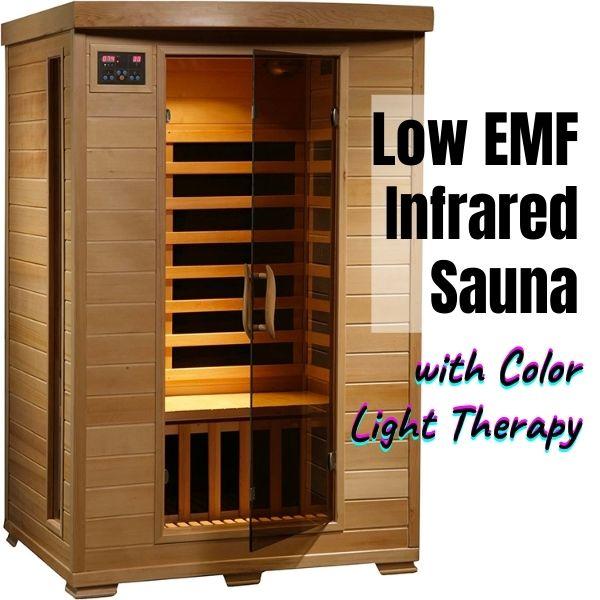
One of the easiest ways to control your budget is to pick a sauna that’s straightforward to assemble yourself. DIY-style kits can save a surprising amount on labor. Units like the Dynamic Saunas Venice 2-Person Far Infrared Sauna and the Radiant Saunas 2-Person Hemlock Infrared Sauna are often highlighted for clear instructions and simple panel-based construction.
The Radiant sauna in particular is known for being very user-friendly, with intuitive controls and a simple learning curve for first-time owners.
Energy-efficient saunas are engineered to deliver the same comfortable sweat using less electricity. That generally means smart insulation, efficient heater design, and controls that prevent unnecessary overheating.
- Well-insulated walls: High-quality insulation in the walls and ceiling keeps heat inside the cabin instead of letting it escape into your garage. Better insulation means quicker warm-up times and less energy needed to maintain temperature.
- Low-wattage heaters: Efficient infrared heaters are designed to produce effective warmth at lower wattages. They reach the temperature you want without drawing more power than necessary.
- Digital controls: Modern digital controllers let you dial in precise temperature and session duration. That precision helps avoid overshooting your setpoint and wasting energy.
Also see: How to Save Money on Sauna Electricity Costs
6. Extra Therapeutic Features:
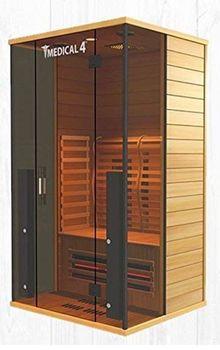
Many people gravitate toward infrared saunas for relaxation, stress reduction, pain relief, circulation support, and detox-style sweating. Full-spectrum models combine near, mid, and far infrared in one cabin so you can potentially tap into all of those benefits at once.
Extra comforts like integrated speakers and chromotherapy (color-changing) lighting can take your sessions from “basic heat box” to spa-like escape. Saunas such as the Health Mate Enrich II and the Heatwave Low-EMF Sauna include these enhancements. If you enjoy music, guided meditations, or mood lighting, they can absolutely be worth the upgrade.
When you weigh size, technology, build quality, safety, efficiency, and add-ons together, it becomes much easier to narrow in on the ideal infrared (IR) sauna for your home setup. From there, you can compare specific models and price points with a lot more confidence.
Note: Most home saunas are pleasantly quiet, often measuring well below 60 decibels. The quietest units are usually those without fans or built-in speaker systems running during use.
Potential Problems with Infrared Saunas:
Before you click “buy,” it’s also smart to be realistic about the trade-offs. Home infrared saunas are fantastic, but there are a few common drawbacks to keep on your radar:
- Dehydration: You’ll sweat a lot in an IR sauna, which is part of the appeal—but you’ll also need to drink plenty of water before and after each session to stay hydrated.
- Overheating: Staying in too long or ignoring how you feel can lead to dizziness, lightheadedness, or nausea. It’s important to listen to your body and step out if something feels off.
- EMFs: Even though levels are typically low, some people are sensitive or simply prefer to minimize exposure. Low-EMF designs are available if this is a concern.
- Maintenance: Your sauna will need basic upkeep—wiping down benches, checking heaters and wiring occasionally, and keeping the cabin dry between uses. On average, infrared heaters can last 5–15 years or more; carbon heaters are often favored for their durability.
- Cost: The upfront investment plus operating costs can add up. The good news is there are budget-conscious options and plenty of ways to trim monthly electricity usage.
- Space: Larger units can dominate a room or garage bay. Adequate clearance and ventilation are important, so if indoor space is tight, an outdoor model might make more sense.
- Medical Conditions: If you have cardiovascular issues, low blood pressure, are pregnant, or take certain medications, you should talk to your doctor first. You can read more on who should not use an infrared sauna.
- Health Claims: Many people report benefits, but results can vary and research is still evolving. It’s best to view a sauna as one tool in an overall wellness routine, not a cure-all.
Weighing both the pros and the limitations will help you make a smart decision for your home and your health. Reading reviews and talking with other owners can also give you a clearer picture of what to expect. Personally, I use my sauna about three times a week for 15–20 minutes, and notice better sleep, focus, and overall relaxation—which is exactly why doing a bit of homework before buying is so worthwhile.


